


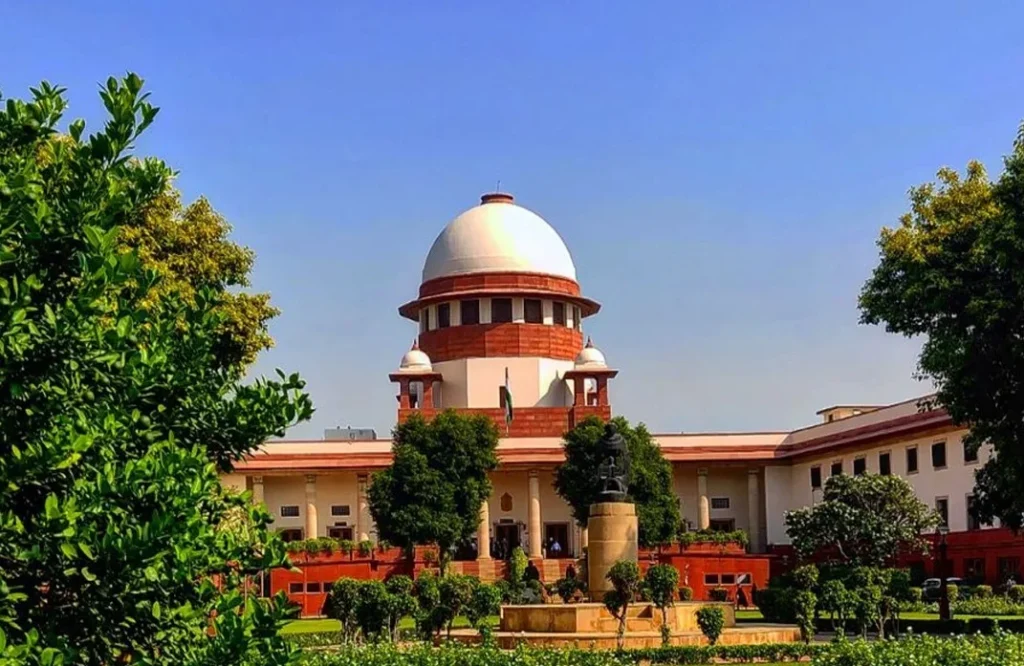
24 March 2026: In a landmark judgment on Tuesday, the Supreme Court ruled that a person who converts to another religion completely loses his Scheduled Caste status. The Supreme Court upheld the Andhra Pradesh High Court’s decision. The High Court had said that a person who, for example, converts to Christianity and lives according to the Christian religion cannot be considered a Scheduled Caste. The court said that a person who follows any religion other than Hinduism, Sikhism and Buddhism cannot be considered a member of the Scheduled Caste.
What is the full story?
The Supreme Court said that the Constitutional Order, 1950, clearly states that conversion to any religion other than those specified in Article 3, irrespective of birth, immediately forfeits the status of Scheduled Caste.
The decision was given in the case of a person who had converted to Christianity and was now working as a priest, but had filed a case against some persons under the SC/ST (Prevention of Atrocities) Act. The person who filed the case had sought protection under the SC/ST Act. However, the persons against whom the case was registered challenged this claim, claiming that the victim had converted to Christianity.
The High Court ordered the removal of sections of the SC/ST Act.
On April 30, 2025, the Andhra Pradesh High Court ruled that there is no caste system in Christianity. Therefore, the victim is not eligible to avail the benefits of the provisions of the SC/ST Act. Following this, the High Court ordered the removal of sections under the SC/ST Act. The priest filed a special leave petition in the Supreme Court against the High Court order.
What did the Supreme Court say?
A bench of Justices Prashant Kumar Mishra and N.V. Anjaria said, “In this case, it is not important whether the appellant has converted from Christianity to his original religion or has been accepted by his original community. Rather, the evidence proves that the appellant practices Christianity and has been working as a priest for more than a decade.” He regularly conducts Sunday services in village homes. There is no doubt from these facts that he was a Christian at the time of the incident.